 (905) 609-1070
 drh@naturalhealthoptions.ca
 2349 Fairview Street, Unit 211, Burlington, ON L7R 2E3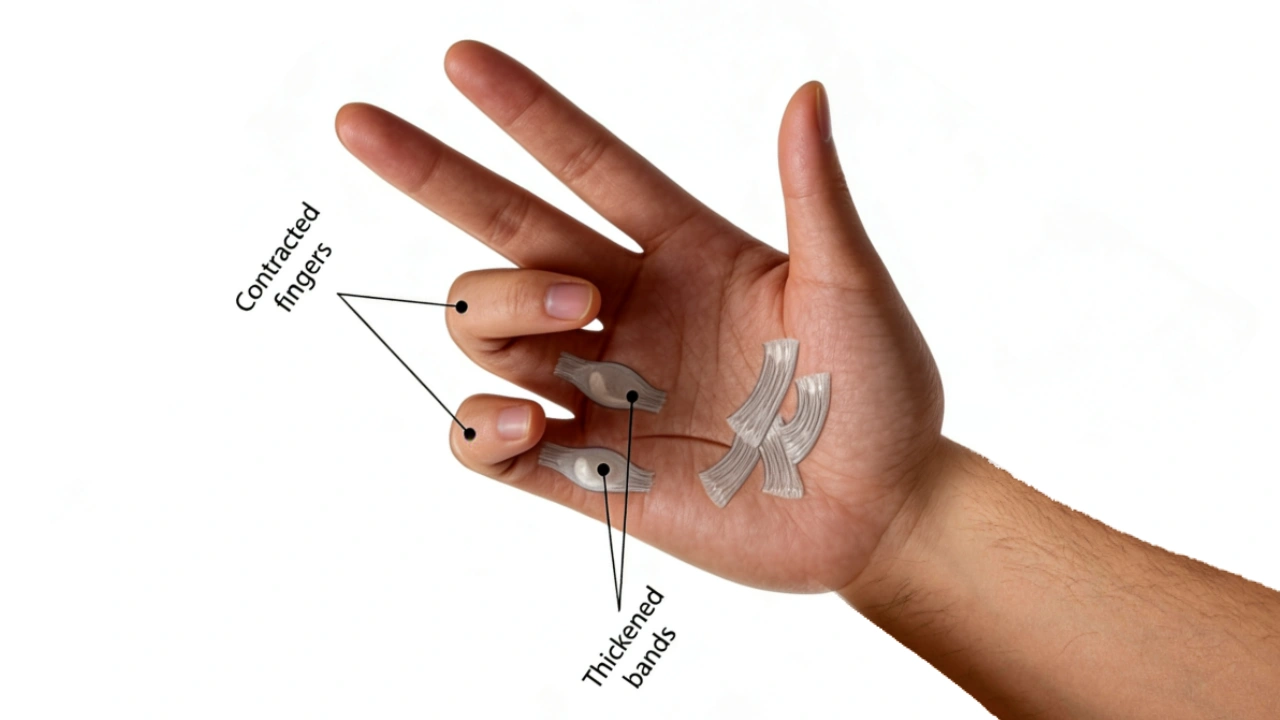


Dupuytren’s Contracture is one of those conditions most people don’t think about until it starts taking away something as simple as opening your hand.
It begins quietly. A small nodule in the palm. A bit of tightness. Then, over time, fingers begin to curl inward. Daily tasks become difficult. In advanced stages, the hand can become permanently deformed.
Conventional medicine often responds late, typically when surgery becomes necessary. But what if we could intervene earlier, more gently, and possibly more effectively?
That question became the foundation of my research.
The Problem with Current Treatments
Today, treatment for Dupuytren’s Contracture largely revolves around:
- Surgery
- Collagenase injections
- Pain management through medications
While these approaches can be effective, they come with trade-offs:
- Risk of nerve and vascular damage
- Recurrence of the condition
- Long recovery periods
- Side effects from medications
In many cases, patients are told to wait until the disease progresses enough to justify intervention.
That “wait and watch” approach is exactly where I saw a gap.
A Different Approach: Microcurrent Therapy
My research explored a non-invasive alternative: microcurrent therapy.
Microcurrent uses extremely low-level electrical signals similar to the body’s natural electrical activity to stimulate healing at the cellular level.
Instead of cutting or chemically breaking down tissue, this approach aims to:
- Improve microcirculation.
- Stimulate angiogenesis (new blood vessel formation).
- Reduce inflammation and oxidative stress.
- Influence fibroblast activity (the cells responsible for fibrosis).
In simpler terms:
help the body repair itself before irreversible damage occurs.
What I Studied
I conducted a clinical study involving 9 patients with Dupuytren’s Contracture, treated with microcurrent therapy over 10 consecutive sessions.
Each session lasted about 30 minutes, and progress was tracked using:
- Visual documentation (before/after images)
- Measurement of nodule size and hardness
- Functional improvement in hand mobility
What We Observed
The results were promising, especially in early and moderate stages:
- Sessions 1–3: Nodules began softening
- Sessions 4–9: 5–15% reduction in size per session
- By Session 10: Noticeable restoration of hand function in many cases
Some patients experienced:
- Full recovery of hand movement
- Significant reduction in fibrosis
- Prevention of disease progression
However, not every case responded equally. Advanced cases showed more limited improvement, highlighting an important insight:
👉 Timing matters. Early intervention is critical.
Why This Matters
Dupuytren’s Contracture isn’t just a hand condition; it’s a reflection of deeper biological processes:
- Chronic inflammation.
- Impaired circulation.
- Fibrotic tissue buildup.
Microcurrent therapy appears to address these underlying mechanisms by:
- Increasing blood flow (reducing hypoxia).
- Supporting cellular repair.
- Promoting collagen remodelling.
This shifts the focus from symptom management → functional restoration.
A Broader Perspective: Integrative Medicine
One of the most important insights from this research is that outcomes improved when therapy wasn’t used in isolation.
Patients who also addressed:
- Nutrition
- Stress
- Blood sugar regulation
- Lifestyle factors
tended to recover faster and more completely.
This reinforces a key idea:
👉 Chronic conditions are rarely just local problems; they’re systemic.
Limitations and Reality Check
It’s important to stay grounded:
- This was a small sample size (9 cases)
- Results varied between individuals.
- More large-scale, controlled studies are needed.
This is not a replacement for all conventional treatments yet.
But it is a strong signal that we may be overlooking effective, low-risk interventions.
The Future of Treatment
If there’s one takeaway from this work, it’s this:
We need to stop waiting for diseases like Dupuytren’s Contracture to become surgical problems.
Microcurrent therapy offers a potential path toward:
- Earlier intervention
- Non-invasive care
- Reduced dependence on surgery
- Better quality of life for patients
Final Thought
Medicine is evolving.
The future isn’t about choosing between conventional and alternative approaches, it’s about integrating the best of both.
Microcurrent therapy may not be the final answer.
But it’s an important step toward asking better questions.